29days11hours44minutes10seconds
Jazz Recording & Live Performance Microphone Field Guide
ADK Microphones
When you’re capturing a jazz ensemble, every detail matters—articulation, dynamics, transient response, and musical tone across a wide range of instruments and SPLs. Unlike many other genres, jazz demands microphones that can handle nuance just as confidently as power, whether on stage or in the studio.
That’s why professional jazz organizations—including ensembles like the Jazz at Lincoln Center Orchestra and the Knoxville Jazz Orchestra—have turned to ADK Microphones as trusted tools for both live performance and recording.
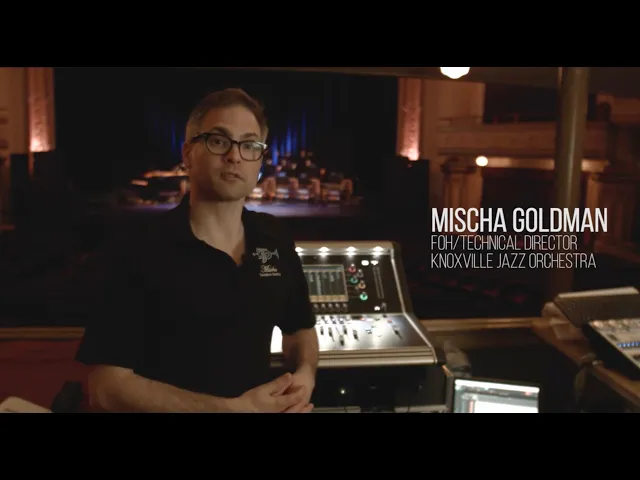
In a recent interview, Mischa Goldman, Front of House Engineer and Technical Director for the Knoxville Jazz Orchestra, shares his thoughts on why ADK microphones have been the perfect solution—and how they’ve proven reliable across horns, rhythm section, soloists, and ensemble capture. While the video provides real-world insight, the principles discussed apply broadly to jazz engineers working in clubs, concert halls, educational settings, and studios alike.
Jazz Recording & Live Performance Microphone Field Guide
3 Zigma | Voicing Character | Best Use Cases | Why To Choose It? |
|---|---|---|---|
Bright, fast, forward | Upright Bass Guitar | Excellent transient detail, helps articulate timekeeping without excess low-mid buildup | |
Open, airy, extended top end | Featured Soloists Baritone Sax Guitar Room mics (Jazz) Drum Overheads | Adds dimension and space without harshness. Great for melodic instruments | |
Smooth, balanced, controlled highs | Alto & Tenor Sax Trumpet Ensemble Overheads Steinway, (Bosendorfer, Fazioli) Piano | Tames brightness, blends sections naturally, excellent tonal balance Natural blend, controlled brightness, excellent section cohesion | |
Mid-forward, punchy, classic | Soprano Sax Guitar Amp or Spot Yamaha, Kawai, Bechstein Piano | Strong presence and projection without hype | |
Warm, full, authoritative | Trombones Low Brass Reedy/Bright Sax | Strong low-mid body, vintage weight, musical density, strong fundamentals | |
Neutral, accurate, fast | Piano Vibes Aux Percussion Strings | Clean capture with minimal coloration | |
Presence-enhanced, articulate | Upright Bass Snare Aux Percussion Snare | Focused midrange cuts through ensemble | |
Open, diffuse | Ensemble & Ambiance Room Ambiance | Natural spatial capture | |
Focused, directional | Ensemble Spots/Support | Controlled pickup with clarity |
T-FET | Voicing Character | Best Use Cases | Why To Choose It? |
|---|---|---|---|
Fast, clean, articulate | Upright Bass Guitar | High SPL handling with condenser detail | |
Deep lows with smooth highs | Baritone Sax Bass-Heavy Horn Sources (Jazz) Drum Overheads | Handles low frequency energy without losing definition | |
Smooth mids, controlled top | Alto & Tenor Sax Dense Horn Sections Steinway, Bosendorfer, Fazioli Piano | Sits easily in a mix, excellent bleed control | |
Fast, clear, articulate | Trumpet & Sax Soloists Ensemble spots Horns Piano | High SPL handling, punch, and transient clarity | |
Mid-forward, punch | Soprano Sax Yamaha, Kawai, Bechstein Piano | Definition and impact without boom | |
Warm, deep, controlled | Trombones Low Brass Reedy/Bright Sax | Strong low-mid body, classic weight, musical density |
Choosing Between 3 Zigma and T-FET?
When choosing between 3 Zigma and T-FET, the decision comes down to SPL and control. If super-high SPL is required, use FX, while T-FET is the better choice when multi-pattern flexibility or a smoother British-style transformer character is beneficial. Many jazz engineers use both, pairing tonal shaping with the right tool for each source.
3 Zigma — Capsule Choice as a Creative Tool
The modular 3 Zigma system allows engineers to tailor a microphone’s tonal character to the instrument, section, or room—making it ideal when nuance and voicing matter most.
Why choose 3 Zigma for Jazz Recording & Live Performance?
👉 Interchangeable capsules inspired by classic tone profiles
👉 Excellent for section blending and tonal shaping
👉 Ideal when musical color is prioritized over raw SPL
👉 Consistent performance across ensembles and venues
3 Zigma Capsule Highlights
C-LOL 12 – Bright, fast, and forward—ideal for upright bass and jazz guitar, delivering excellent transient detail that articulates timekeeping without excess low-mid buildup.
C-LOL 251 – Open, airy, and detailed—excellent for featured soloists, baritone sax, jazz guitar, room mics, and jazz drum overheads, adding dimension and space without harshness.
C-LOL 67 – Smooth, balanced, and controlled—perfect for alto & tenor sax, trumpet ensembles, overheads, and grand piano (Steinway, Bösendorfer, Fazioli), offering natural blend and tonal cohesion.
C-LOL 47 – Mid-forward, punchy, and classic—well suited for soprano sax, guitar amps or spots, and grand piano (Yamaha, Kawai, Bechstein) with strong presence and projection without hype.
C-LOL 49 – Warm, full, and authoritative—an excellent choice for trombones, low brass, and reedy or bright saxophones, providing vintage weight, strong fundamentals, and musical density.
T-FET — Classic Tone, Modern Control
The T-FET series blends vintage-inspired tonal character with modern FET circuitry and transformer balance, creating microphones that are musical, reliable, and performance-ready—especially when clarity, headroom, and control matter.
Why choose T-FET for Jazz Recording & Live Performance?
👉 Classic tone with modern performance — low noise and high-SPL handling
👉 Musical soft saturation — added density without harsh clipping
👉 Tri-polar pattern control — cardioid, omni, and figure-8 for bleed management
👉 Fast transients & high headroom — articulate capture of horns, piano, percussion, and ensembles
T-FET Model Highlights
Vienna-12 T – Fast, clean, and articulate—ideal for upright bass and jazz guitar, delivering high-SPL handling with condenser detail and precision.
Cremona-251 T – Deep and full with smooth highs—an excellent choice for baritone sax, bass-heavy horn sources, and jazz drum overheads, handling low-frequency energy without losing definition.
Hamburg-67 T – Smooth and controlled with rich mids—perfect for alto & tenor sax, dense horn sections, and grand piano (Steinway, Bösendorfer, Fazioli), sitting easily in a mix with excellent bleed control.
Munich-7 T – Fast, clear, and punchy—well suited for trumpet and sax soloists, ensemble spots, horns, and piano, offering high-SPL handling, strong transients, and authoritative clarity.
Berlin-47 T – Mid-forward and impactful—ideal for soprano sax and grand piano (Yamaha, Kawai, Bechstein), providing definition and projection without boom.
Frankfurt-49 T – Warm, deep, and controlled—an excellent choice for trombones, low brass, and reedy or bright saxophones, delivering classic weight, strong fundamentals, and musical density.
Bringing It All Together
Jazz recording and live performance rarely rely on a single microphone solution. Many engineers find success using a hybrid approach—3 Zigma microphones for tonal shaping and ensemble blend, paired with T-FETs for high-energy soloists, low-frequency instruments, and demanding stage environments.
The table above is designed to serve as a practical starting point, helping you make confident, musical microphone choices for jazz—whether you’re capturing a small combo, a big band, or a full jazz orchestra.
*Special Thanks to the Knoxville Jazz Orchestra and Eric Smith for the incredible photography.